

How NLCS Turned Spreadsheet-Driven Admissions into a Single Workflow
The Challenge
- Admissions were previously managed via spreadsheets, mail merges and manual emails
- Applicant data sometimes became fragmented across multiple places
- Tracking applicant references from the large feeder-school network relied on manual chasing and processing
- Peak-season workload created real pressure for the entire team
The Outcome with SchoolBase
- End-to-end admissions managed in a single system
- Parent-entered data flows cleanly from enquiry to enrolment
- Bulk, personalised communications with built-in progress tracking
- Real-time visibility of pupil numbers to plan strong cohorts
The Starting Point: Systems Without Connections
The SchoolBase MIS had been in place at NLCS for several years, but admissions was still running on spreadsheets and manual email chains. Applicant data lived in several places, communications had to be built from scratch each time, and tracking where a candidate stood depended on someone remembering to update a shared file.
When the admissions team went through a change in leadership, with Jess joining the school, it created an opportunity to do something about it. The question wasn’t which new tool to add; it was how to use what the school already had properly.
The Shift: One Workflow, From Enquiry to Enrolment
NLCS moved most of their admissions journey into the SchoolBase Admissions module. This allowed management of lots of areas, including initial enquiry, registration, assessment, offer, and acceptance. For the admissions team, that means working from a single reliable record and seeing, at any moment, exactly where every applicant sits.
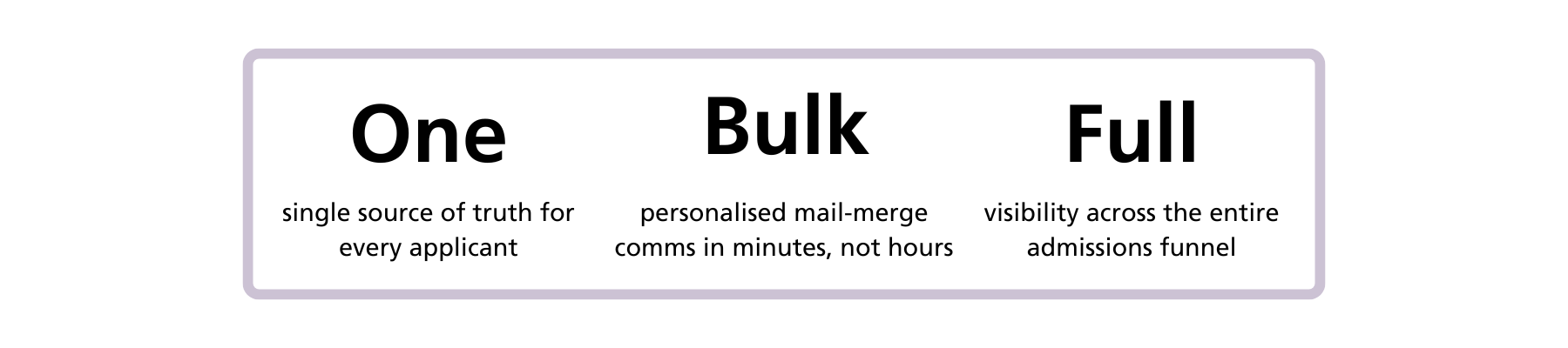
Offer letters, reference requests, and registration-exam communications, all tasks that used to be measured in hours, are now completed in seconds via the SchoolBase mail-merge tools. Messages go out in bulk, but each one is personalised, and progress is visible as responses come back in.
For a school with a feeder-school network the size of NLCS’s, reference chasing used to be one of the most labour-intensive jobs of the year. Now it’s a routine task, with successful candidates’ data carried through into their pupil records automatically.
Configured to the NLCS Way of Working
Workflows, data fields, and communication templates in SchoolBase are all configurable, so the system handles the school’s standard entry points and its occasional-place admissions in whatever shape the team needs.
That flexibility matters over time. As policies, year groups and reporting needs evolve, the system evolves with them, rather than becoming the reason a change can’t happen.
“Most of the time, you get given a software package and get told that’s just how it works. With SchoolBase, the flexibility means we’ve been able to customise the system to work how we want it to.” Jessica Mendes Rego, Head of Admissions NLCS
A Clearer Experience for Staff — and for Families
Inside the team, SchoolBase has offered more control. Staff can filter applicants, flag incomplete submissions and surface outstanding actions in seconds. Linking to other SchoolBase modules also gives the team a live view of pupil numbers, which makes it easier to identify gaps and plan admissions activity that supports strong academic cohorts.
Families feel the difference too. Through the SchoolBase Parent Portal, they can accept offers, access documents and track their child’s progress through admissions in one place. This provides a consistent, professional experience rather than a series of disconnected emails. Behind the scenes, that same centralisation means better record-keeping and more joined-up communication across the whole school.